
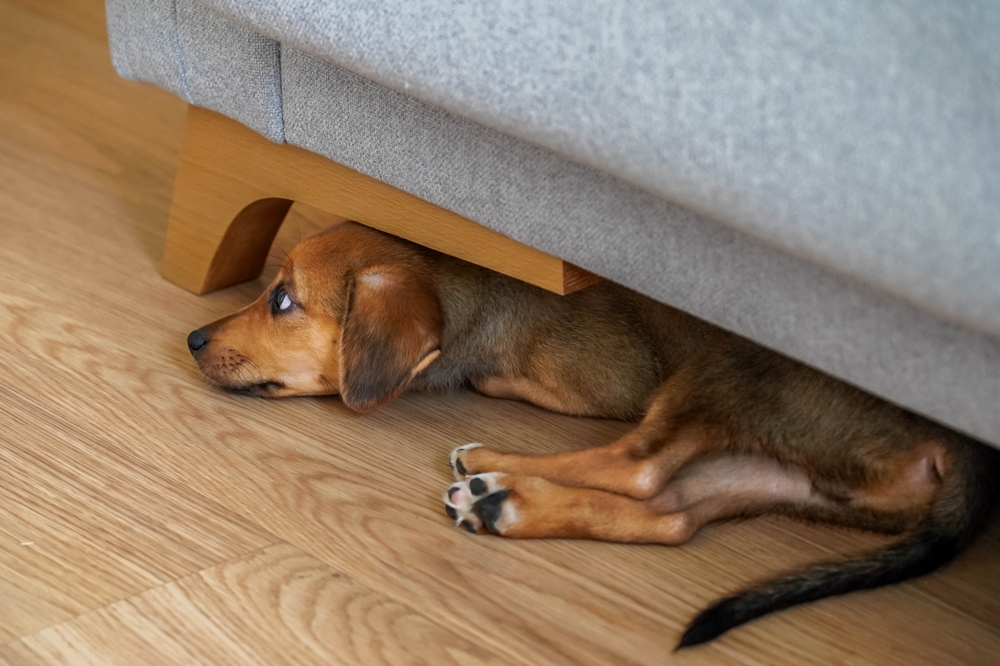
Your new dog, however, may need time to feel equally enthusiastic.
Even a positive change can be overwhelming. Your dog has entered an unfamiliar home filled with new people, routines, smells, sounds, and expectations. Some adopted dogs explore immediately, while others hide, sleep excessively, pace, have accidents, or seem unusually quiet.
The first 30 days are less about showing your new dog everything their new life has to offer and more about helping them feel safe enough to enjoy it.
Think of Adjustment as a Process, Not a Deadline
You may have heard of the “3-3-3 rule,” which suggests that an adopted dog may need approximately three days to decompress, three weeks to begin learning the household routine, and three months to feel at home.
This can be a helpful general framework, but it is not a schedule every dog will follow. Age, temperament, previous experiences, health, and the number of transitions a dog has experienced can all affect adjustment.
Some dogs settle in quickly. Others need considerably more time. Allow your dog to progress at their own pace instead of worrying about whether they are “behind.”
Before Your New Dog Arrives
A little preparation can make those first days much easier.
Create a quiet area where your dog can rest without being disturbed. Depending on the dog, this might include a comfortable bed, an open crate, water, a few safe toys, and a gate that separates the area from the busiest parts of the home.
You will also want to:
- Remove accessible food, medications, trash, electrical cords, and toxic plants.
- Check fences, gates, doors, and screens for possible escape routes.
- Purchase a properly fitted collar or harness and leash.
- Attach current identification information.
- Ask what food and feeding schedule the dog is used to.
- Schedule a veterinary appointment and gather any available medical records.
- Agree on household rules before the dog arrives.
Consistency is reassuring. Deciding in advance where your dog will sleep, eat, eliminate, and spend quiet time prevents everyone from giving the dog different instructions.
The First Day: Keep Life Small and Calm
It can be tempting to welcome a newly adopted dog with visitors, toys, excursions, and introductions to everyone in the neighborhood. For most dogs, a quiet arrival is kinder.
Take your dog to the designated potty area and allow time to sniff. Then introduce the home gradually rather than offering immediate access to every room.
Keep your dog leashed outdoors, even in a fenced area, until you are confident the space is secure and you understand how the dog responds to unfamiliar noises and movement. Newly adopted dogs can be particularly vulnerable to escaping because they do not yet recognize your home as theirs.
Offer water and a meal at the appropriate time, but do not be alarmed if your dog has little appetite that first day. Give them opportunities to approach you without forcing petting or prolonged interaction.
Most importantly, let your dog rest. Stress and excitement can be exhausting.
The First Few Days: Build a Predictable Routine
Your dog does not yet know what happens next. A predictable routine helps answer that question.
Try to keep meals, potty breaks, walks, quiet time, and bedtime relatively consistent. Take your dog outside frequently and reward outdoor elimination, even if they were reportedly house-trained. Accidents during a major transition don’t necessarily mean training has been forgotten.
Keep walks short and quiet at first. Your dog can experience the neighborhood gradually without visiting crowded stores, busy parks, or dog-friendly events during the initial decompression period.
Watch your dog’s body language. Signs that they may need more space or a break include:
- Turning or moving away
- Lip licking or repeated yawning
- A tucked tail or lowered posture
- Trembling, panting, or pacing
- Refusing food
- Hiding or becoming unusually still
- Growling when approached
A growl is valuable communication, not misbehavior to punish. It tells you that the dog is uncomfortable and needs more distance or a different approach.
Introduce Family Members Gradually
Avoid surrounding your new dog or passing them from person to person. Allow them to initiate contact whenever possible.
Teach children to leave the dog alone while it is eating, sleeping, chewing a toy, or resting in its safe area. An adult should supervise interactions, even when the dog seems friendly.
Introductions to resident pets should also be gradual. Dogs may do best meeting outdoors in a neutral area before entering the home together. Cats should initially have dog-free spaces, elevated escape routes, and a barrier that allows the animals to observe one another without direct contact.
Do not rush face-to-face interaction. Peaceful coexistence is a much better initial goal than instant friendship.
The First Week: Begin Teaching With Kindness
Once your dog is eating, resting, and exploring more comfortably, you can begin introducing simple household skills.
Short, positive training sessions can help your dog learn:
- Their new name
- Where to eliminate
- How to settle on a bed or mat
- How to walk with you
- Which items are appropriate to chew
- How to come when called indoors
- How to trade an object for a reward
Reward the behaviors you want to see more often. If your dog makes a mistake, consider what management change could prevent it next time. Baby gates, closed doors, leashes, exercise pens, and appropriate chew items are often more effective than correction.
This is also a good time to practice brief, comfortable periods alone. Start with very short separations instead of waiting until you must leave for several hours. Gradually building alone time can help your dog learn that departures are temporary and safe.
Weeks Two Through Four: Let Your Dog’s Personality Emerge
As your dog becomes more comfortable, you may notice behaviors that weren’t evident during the first few days. A previously quiet dog may become playful, energetic, vocal, or more opinionated.
This does not mean your dog has suddenly “become bad.” The change may mean they finally feel safe enough to behave more naturally.
Continue providing structure while gradually expanding your dog’s world. Depending on the individual, you might introduce:
- Slightly longer walks
- New walking routes
- Food puzzles and scent games
- Brief visits with calm friends
- Short car rides to enjoyable destinations
- Additional rooms in the home
- Positive training sessions in mildly distracting environments
Add one or two experiences at a time. If your dog shows more anxiety, overexcitement, sleep disruption, or unwanted behavior, scale back and give them more time.
When Should You Introduce Professional Pet Services?
Training, grooming, daycare, and boarding can all become positive parts of your dog’s life, but the best timing depends on the individual.
Training
You don’t need to wait for a serious problem to seek training help. Early guidance can help you establish good communication, prevent unwanted habits, and understand your new dog’s body language.
Union Lake Pet Services offers positive dog training for dogs and families with different needs and experience levels.
Grooming
Begin with brief, gentle handling at home. Pair touching your dog’s paws, ears, and body with treats, and stop before the dog becomes overwhelmed.
When scheduling professional pet grooming, share everything you know about your dog’s history, handling sensitivities, and preferences. A patient introduction can help future grooming visits become easier.
Dog Daycare
Daycare can provide activity, enrichment, and social opportunities for dogs who enjoy group play. However, not every dog wants or benefits from a busy social environment.
Give your dog time to settle at home before deciding whether they want dog daycare. A thoughtful introduction and compatibility assessment can help determine whether daycare is a good fit.
Boarding
If possible, avoid planning a long boarding stay immediately after adoption. If travel cannot be avoided, give the boarding team detailed information about your dog’s routine, behavior, health, fears, and adjustment needs.
Once your dog has settled in, shorter introductory visits can help them become familiar with the setting before a longer boarding stay.
When Your New Dog Needs More Help
Adjustment challenges are common, but some concerns shouldn’t be attributed to a dog “needing more time.”
Talk with your veterinarian, behavior modification team, or an appropriately qualified behavior professional if your dog:
- Refuses food or water
- Has ongoing vomiting or diarrhea
- Shows signs of pain or illness
- Panics when left alone
- Attempts to escape repeatedly
- Guards food, toys, resting places, or people
- Shows aggression toward people or animals
- Remains persistently fearful or shut down
- Cannot settle or sleep
- Experiences a sudden or significant behavior change
Medical conditions can contribute to behavior, so a veterinary examination is an important first step when concerns arise.
Give the Relationship Time to Grow
The first month with an adopted dog may include joyful discoveries, difficult moments, and plenty of questions. You and your dog are learning about one another, and neither of you needs to get everything right immediately.
Provide safety, predictable routines, appropriate choices, and compassionate guidance. Celebrate small signs of trust: the first relaxed nap, the first playful invitation, the first happy greeting, or the first time your dog seeks you out for reassurance.
Those moments are the beginning of something wonderful.
Union Lake Pet Services can support your new life together with positive training, grooming, daycare, boarding, and behavior services in Waterford, Michigan. Explore our services at unionlakepetservices.com or contact us to discuss the right next step for your newly adopted dog.
