
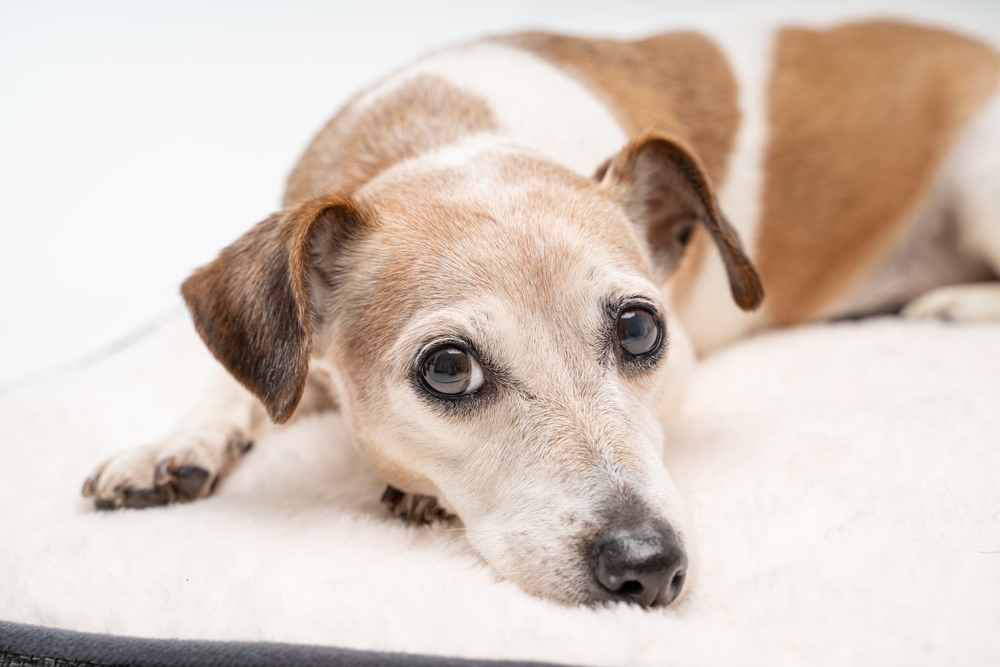
Your senior dog may no longer race through the yard or play an endless game of fetch, but that does not mean the desire for fun has disappeared.
Older dogs still need opportunities to explore, learn, play, socialize, and spend meaningful time with their people. Those activities may simply need to become shorter, gentler, and better matched to the dog’s changing body.
With a little creativity, you can help your senior dog remain curious, confident, and engaged throughout their golden years. Find out more about senior dog enrichment.
Aging Changes How Dogs Play—Not Their Need for Enjoyment
Senior dogs often experience changes in stamina, strength, balance, vision, hearing, or mobility. Arthritis and other medical conditions may also make certain movements uncomfortable.
An older dog who once loved chasing a ball may prefer carrying a toy or finding it during a scent game. A former daycare dynamo may enjoy a smaller group, shorter play sessions, or one-on-one attention. A dog who cannot walk as far may still delight in sniffing every interesting leaf along the way.
The goal is not to make senior dogs play like puppies. It is to help them enjoy activities that suit who they are now.
Let Your Dog Define Fun
Dogs have individual ideas about what makes an activity enjoyable. One dog may love meeting canine friends, while another prefers a quiet walk with a favorite person. Some enjoy solving puzzles, and others happily spend time sniffing outdoors.
Consider your dog’s:
- Personality
- Favorite activities
- Physical abilities
- Energy level
- Social preferences
- Hearing and vision
- Medical conditions
- Comfort around unfamiliar people and dogs
Pay attention to what makes your dog lean forward with interest, wag their tail, or ask for more. Just as importantly, notice when they turn away, slow down, become restless, or appear tired.
Fun should remain a choice—not an obligation.
Choose Gentle, Low-Impact Play
Senior-friendly play should encourage comfortable movement without requiring hard stops, sharp turns, repeated jumping, or prolonged running.
Try activities such as:
- Rolling a ball along the floor instead of throwing it
- Gentle tug with a soft toy
- Short games of fetch on a nonslip surface
- Searching for a favorite toy
- Walking through the yard at your dog’s pace
- Exploring a quiet park or new neighborhood
- Splashing in shallow water if your dog enjoys it
- Playing with a familiar, well-matched canine friend
- Offering soft toys that are easy to pick up and carry
Several short play sessions may suit an older dog better than one long session. Give your dog time to warm up, take breaks, and rest afterward.
Avoid slippery floors and overly rough play. Rugs, runners, or exercise mats can provide better traction and help a senior dog feel more secure.
Turn Walks Into “Sniffaris”
A walk does not have to cover a long distance to provide enrichment.
Dogs gather information through scent. Allowing your senior dog to stop, sniff, and investigate can turn a short outing into a satisfying mental experience.
For a senior-friendly sniff walk:
- Choose a quiet, level route.
- Use a comfortable harness when appropriate.
- Let your dog set a manageable pace.
- Pause for interesting smells.
- Avoid extreme temperatures.
- Watch for fatigue, stiffness, or heavy panting.
- Keep the walk short enough that your dog still feels comfortable on the return trip.
Distance matters less than the quality of the experience. Ten relaxed minutes of sniffing may provide more enjoyment than a hurried walk around the block.
Keep Training Through the Senior Years
The idea that old dogs cannot learn new tricks is simply wrong.
Positive-reinforcement training gives senior dogs mental stimulation, builds confidence, and creates enjoyable interaction with their families. Training may also help older dogs adapt to changes in hearing, vision, mobility, or household routines.
Keep sessions brief—often just a few minutes—and reward effort rather than demanding perfection.
Senior dogs may enjoy learning to:
- Touch a hand with their nose
- Rest their chin on a towel or hand
- Find a hidden treat
- Identify toys by name
- Put toys into a basket
- Ring a bell
- Go to a comfortable mat
- Wait calmly for meals or medications
- Cooperate with brushing, nail care, or harnessing
- Follow a hand signal
- Choose between two toys
If hearing has declined, pair spoken cues with clear hand signals. For dogs with reduced vision, use verbal guidance, scent cues, and consistent room layouts.
Avoid asking a dog with painful joints to sit, lie down, roll over, or repeatedly change positions. A trainer can modify exercises so your dog can participate comfortably.
Use Food and Scent for Mental Enrichment
Food-based activities encourage dogs to use their noses and solve simple problems. You do not need elaborate equipment to create them.
Ideas include:
- A snuffle mat
- A lick mat
- A food puzzle appropriate for your dog’s skill level
- Treats hidden beneath lightweight cups
- A scatter of kibble on a rug or in the grass
- Treats rolled inside a loosely folded towel
- A supervised cardboard-box search
- A “find it” game using treats or favorite toys
- A stuffed food toy
- Different pet-safe scents placed around a room for investigation
Start with easy puzzles so your dog can experience success. Complicated toys can frustrate older dogs, especially those experiencing vision changes or cognitive decline.
Include treats used for enrichment in your dog’s daily food allowance, particularly if weight management matters.
Rotate Activities Without Changing Everything at Once
Novelty can make life interesting, but senior dogs often value predictability too.
Instead of presenting every toy at once, rotate a few favorites. Introduce one new item or activity while keeping familiar routines.
You might create a simple weekly enrichment schedule:
- Monday: Sniff walk
- Tuesday: Food puzzle
- Wednesday: Gentle toy play
- Thursday: Short training session
- Friday: Car ride or visit to a favorite place
- Saturday: Supervised social time
- Sunday: Brushing, massage, and quiet bonding
The schedule does not need to be elaborate. Small enjoyable moments spread throughout the week can make a meaningful difference.
Social Time Should Match Your Dog’s Preferences
Some senior dogs continue to enjoy group play. Others become more selective as they age.
A senior dog may prefer:
- Smaller, thoughtfully matched playgroups
- Calm canine companions
- Shorter periods of social activity
- More frequent rest breaks
- Individual play with a staff member
- Quiet companionship without active wrestling
- Attention from familiar people
Do not assume every older dog wants to withdraw from social life. At the same time, don’t force interaction just because your dog enjoyed it years ago.
At Union Lake Pet Services, dogs who enjoy socializing can participate in supervised groups organized with size, age, temperament, and play style in mind. Dogs who prefer individual attention can enjoy personalized Play Days with outdoor time, walks, enrichment, and one-on-one interaction.
Learn more about our dog daycare and individual-play options.
Know When a Change May Signal Pain
A gradual preference for shorter or calmer activities can accompany aging. A sudden loss of interest, however, may indicate pain or illness.
Contact your veterinarian if your dog:
- Suddenly refuses favorite activities
- Begins limping or moving stiffly
- Has difficulty rising
- Hesitates on stairs
- Stops jumping into the car or onto furniture
- Pants or becomes restless without an obvious reason
- Withdraws from family interaction
- Becomes irritable when touched
- Slips, stumbles, or loses balance
- Tires much more quickly than usual
Do not push a reluctant dog to “work through” the change. A veterinary examination can help identify arthritis, injury, dental pain, heart disease, vision loss, or another underlying concern.
Adjust Activities as Your Dog Changes
Senior enrichment should remain flexible. An activity that works well now may need modification later.
You can adjust by:
- Shortening the activity
- Slowing the pace
- Choosing softer or larger toys
- Adding nonslip surfaces
- Moving activities to one level of the home
- Replacing physical challenges with scent games
- Scheduling activity when your dog feels most energetic
- Adding more rest breaks
- Choosing individual attention instead of group play
If mobility becomes challenging, the team at the Animal Rehabilitation Center of Michigan can help evaluate strength, balance, movement, and comfort. Rehabilitation and appropriate conditioning may help some senior dogs continue participating in activities they enjoy.
Fun Has No Age Limit
Your older dog may not play exactly as they once did, but the desire for connection and enjoyment often remains strong.
A slow sniff walk, a two-minute training game, a favorite food puzzle, or quiet time with a trusted canine friend can add interest and happiness to the day. The best activity is not necessarily the most athletic or impressive. It is the one that leaves your dog comfortable, engaged, and eager to participate again.
Union Lake Pet Services offers positive training, supervised daycare, individualized Play Days, enrichment, grooming, and boarding options that can adapt to your dog’s changing needs.
Call (248) 363-6262 to talk with us about activities and services that may be a good fit for your senior dog.
Keep Exploring
